My race at the Ironman World Championships in Kona, Hawaii, this year was only the second Ironman I had ever completed, having qualified on my first attempt at the Ironman distance in South Africa earlier this year.
The path from South Africa to Kona has not been easy, however, mainly due to a problem with my lower back and pain in my hip flexor that prevented me from running for 6 weeks before the event. When the time came to travel out to the Big Island the pain was at a mild level but I just wasn’t brave enough to try running in case it set the problem off again and stopped me even doing the swim and bike. The running test would have come after T2!
A particular challenge of this event is the notorious heat and humidity in Hawaii. I prepared for this by doing heat acclimatisation sessions in the environmental chamber at the Manchester Institute of Health and Performace, which involved training in temperatures of 33 and 36 degrees and 80 – 90 % humidity. It was crazy how easily my core temperature would elevate to dangerous levels at first but adaptation did occur so that I managed some race pace efforts in there before traveling out to the Big Island.
My first ride on the Queen K was an exhilarating experience. It is like being on sacred ground for Ironman enthusiasts. Despite the severity of the landscape and the conditions it just feels epic. I got home with a huge grin firmly fixed to my face.
The whole build up to the race has an excitement and energy that is hard to describe. Everywhere you look there are lean, athletic types either riding their race bikes or looking fabulous as they run along Ali’i Drive or the Queen K. I kept telling myself that however great everyone looked then, most would not be looking so special 30kms into the marathon!
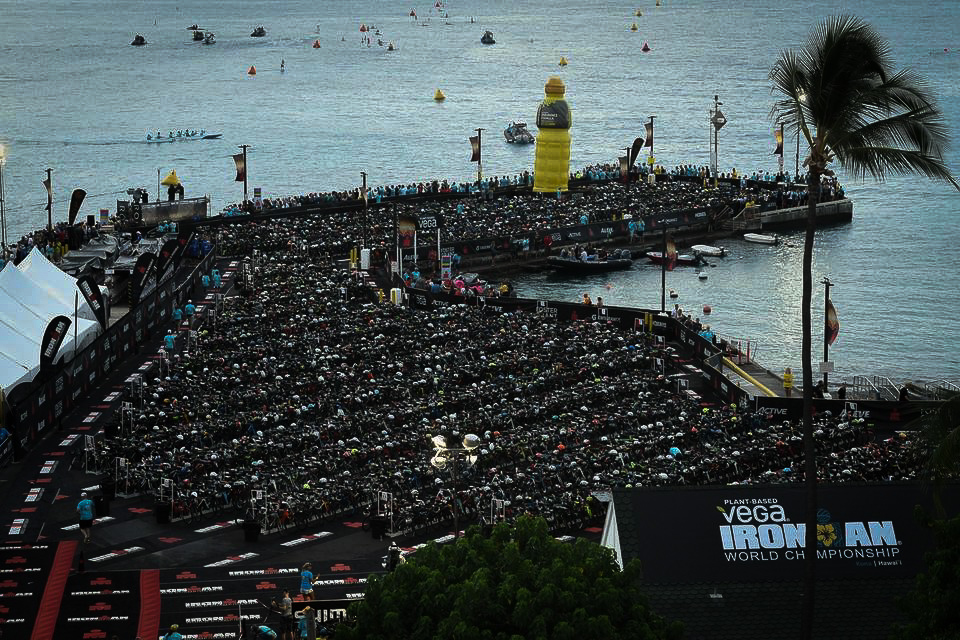
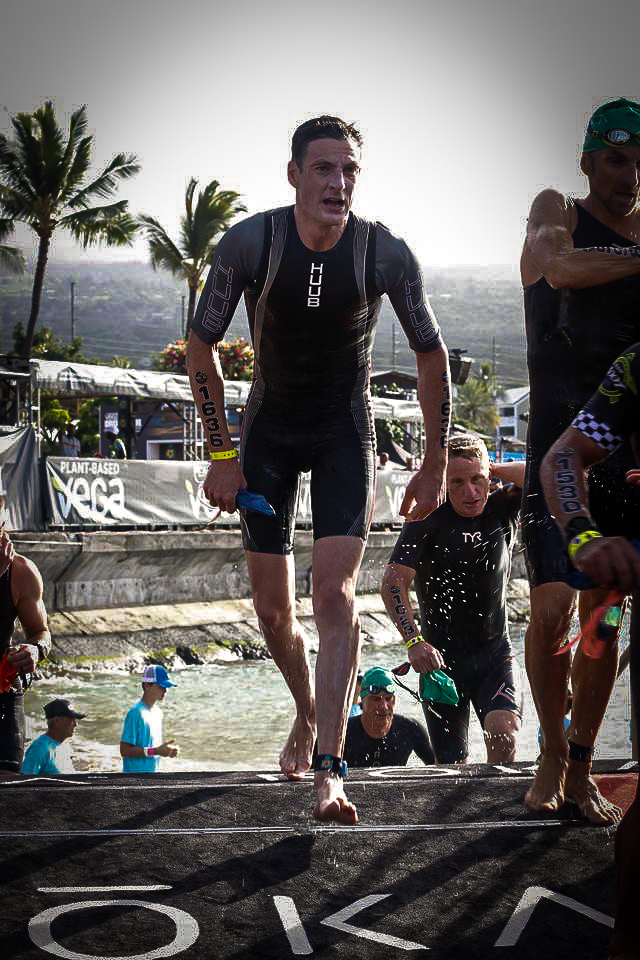
As for the race itself, the sea state was fairly choppy on the day but that was nothing compared with the physicality of the pack. For me it was about surviving without incident and getting out onto the bike.
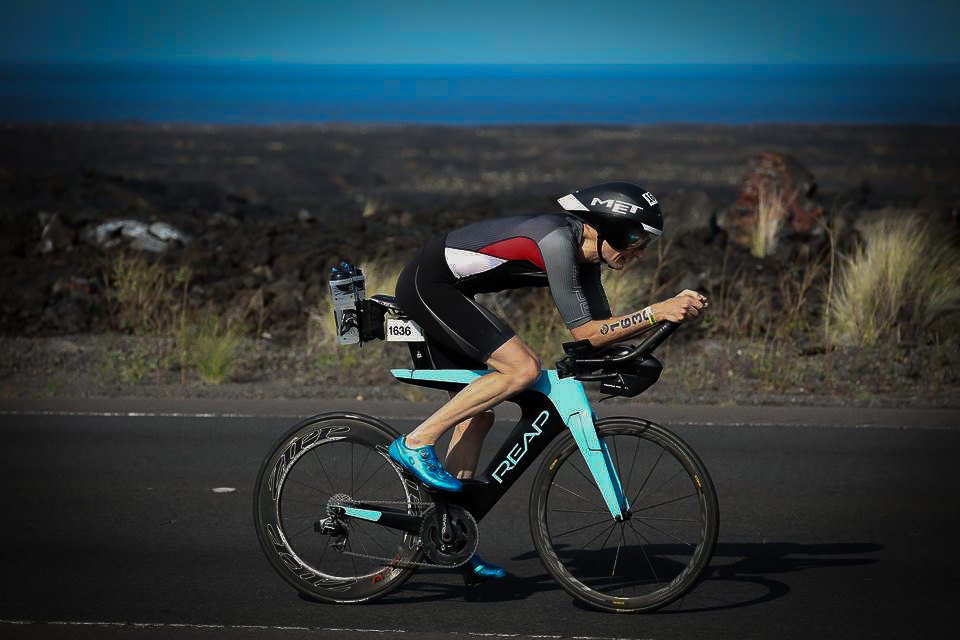
The challenge early on in the bike is finding some clear road in amongst the mayhem to try to find some rhythm without risking a drafting penalty. Sometimes I just had to commit to going round groups even if meant exceeding my power targets.
And so I reached the marathon and the big question: would I be able to run? I could feel my back and hip flexor enough to carry a concern but I managed to push through. Most of my mental energy went into trying to stay hydrated and to avoid overheating. Aid stations are frequent with plenty of opportunities to load up on cold water sponges and cups of ice. Coming out of the Energy Lab, with about 11 km to go, I looked at my watch and saw that I had just under an hour left to get home inside 10 hours. That was pretty motivating as I knew that if I just avoided walking I would make it. Up to that point I had been running with a strict cap on my heart rate due to the over-heating risk but after that I threw caution to the wind and just pushed for the finish.
I came in at 9 hours 57 on the nose and was well inside the top 100 in my age group so my goals for the race were fulfilled in the end, in spite of my injury.
It’s great to know that I have done this race, but I am not sure that I am done with it. I am already wondering how much better I could run without the build up being so marred by injury.
Sincere thanks to my family for their tolerance and support, to my coach Paul Savage for getting me there in the best shape that my injury would allow and to Martin and his team at Reap for the fantastic bike and the continuing help and support searching for those marginal gains.