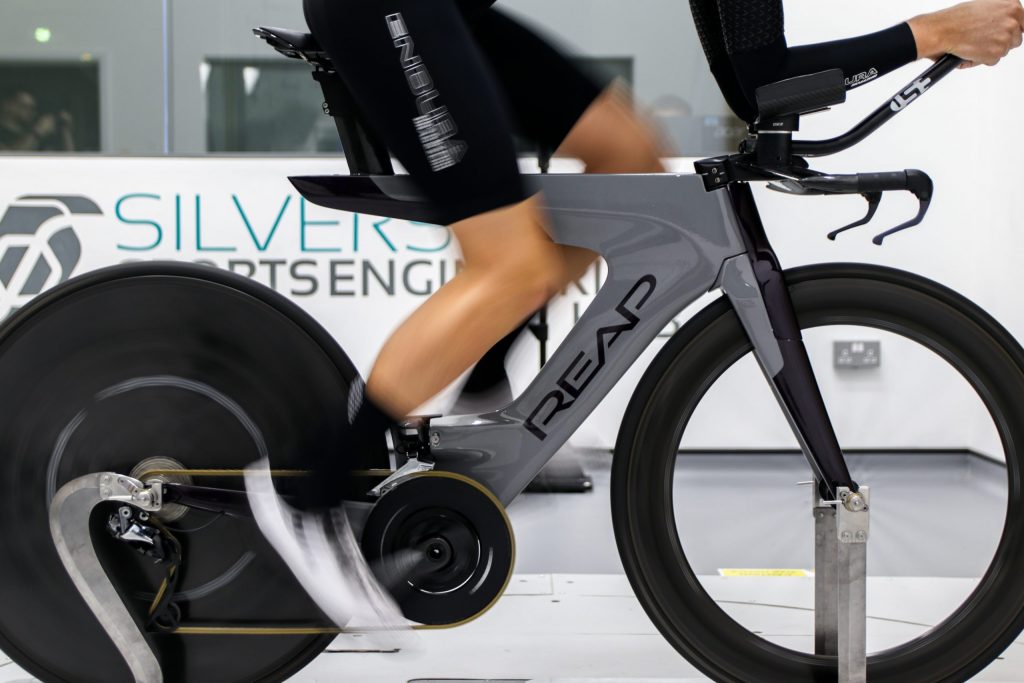
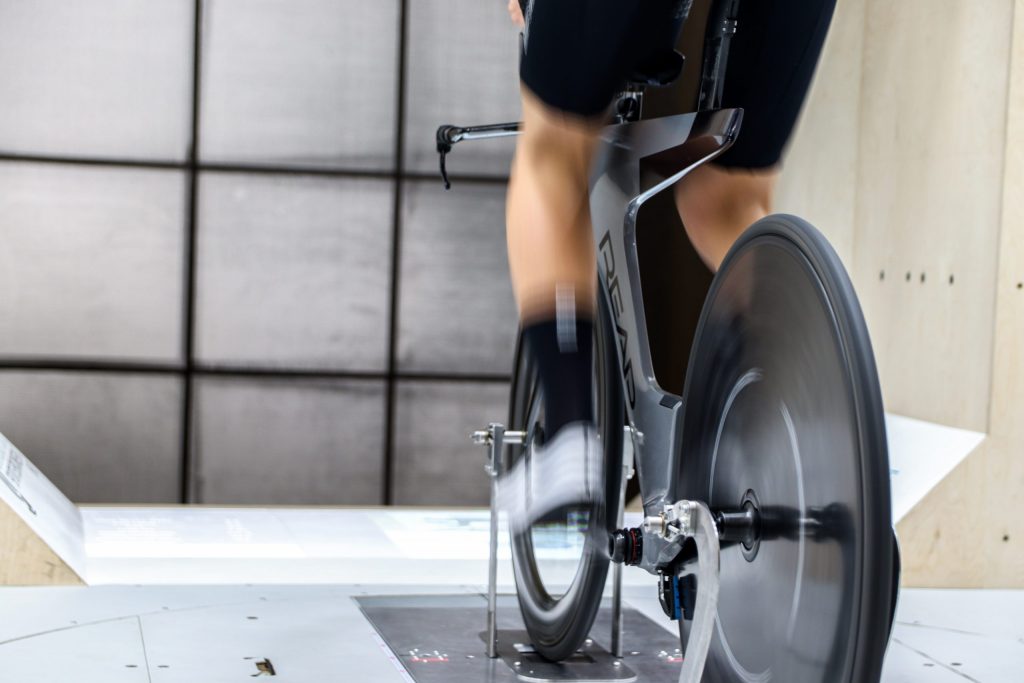
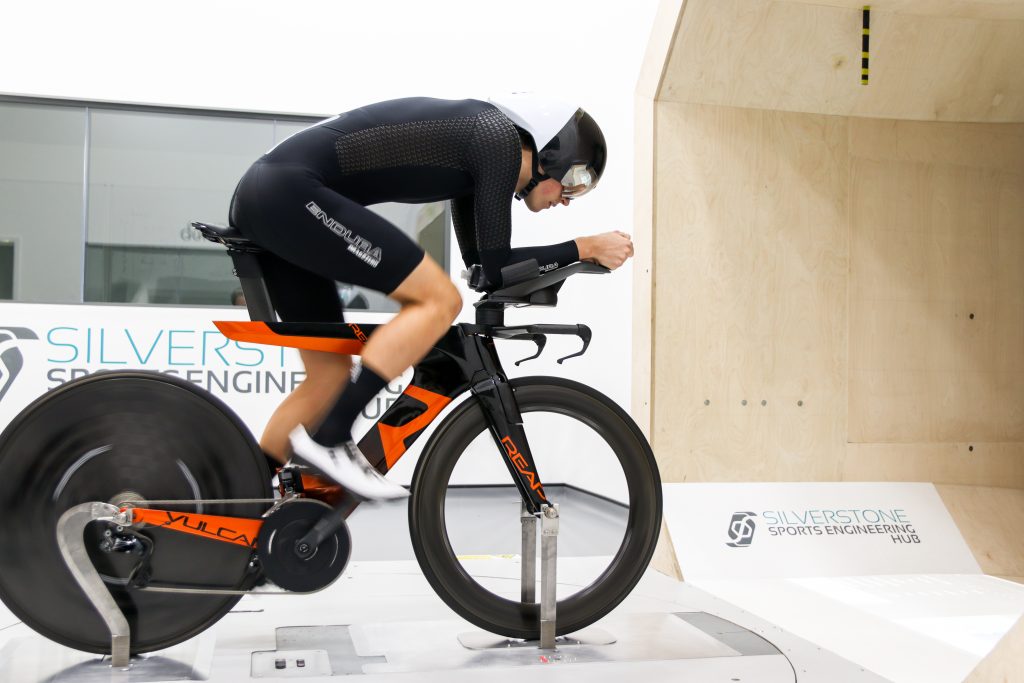
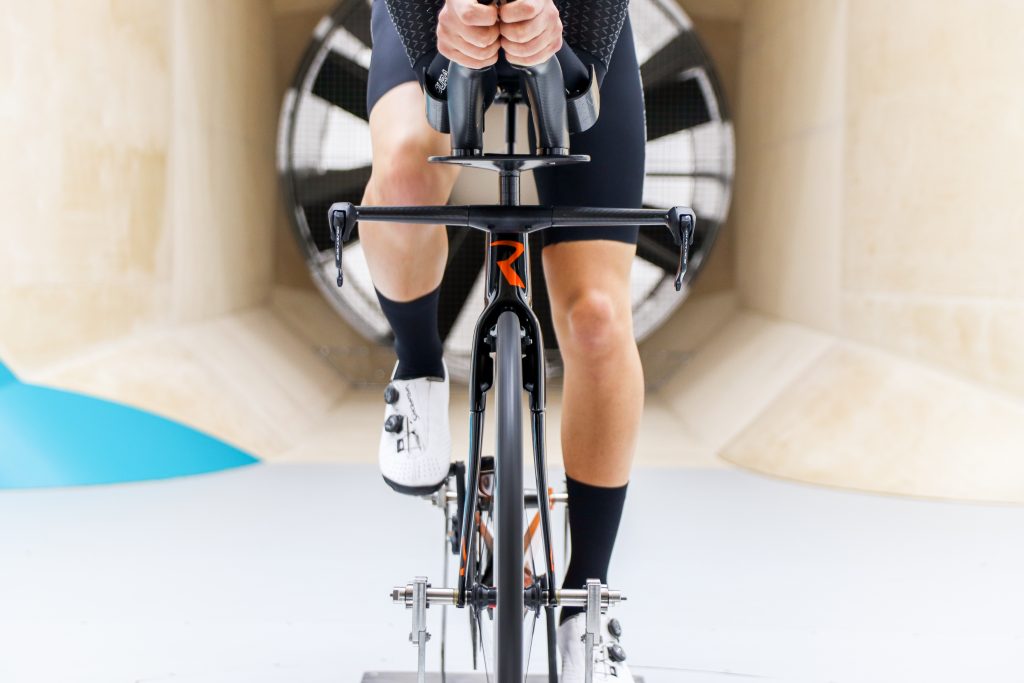
We have recently (and finally!) taken our Vulcan triathlon bike to the wind tunnel to test it against our first triathlon bike the Generation 1.0.
We released our first triathlon bike – the Generation 1.0 – back in 2017 after extensive aerodynamic testing and development. We tested the Gen 1.0 against what was considered the fastest bike at the time, the Cervelo P5-Six and it proved to be between 2-12w faster – not bad for our first bike.
Over the past few years, we have developed our triathlon package further to now include and integrated aerodynamic cockpit, better nutrition and hydration carriage and refined tube shapes. All of these have aided in producing a faster, more efficient bike.
We recently tested the new and improved Vulcan against the Generation 1.0 to see just how far we’d come, and we were pleasantly surprised.
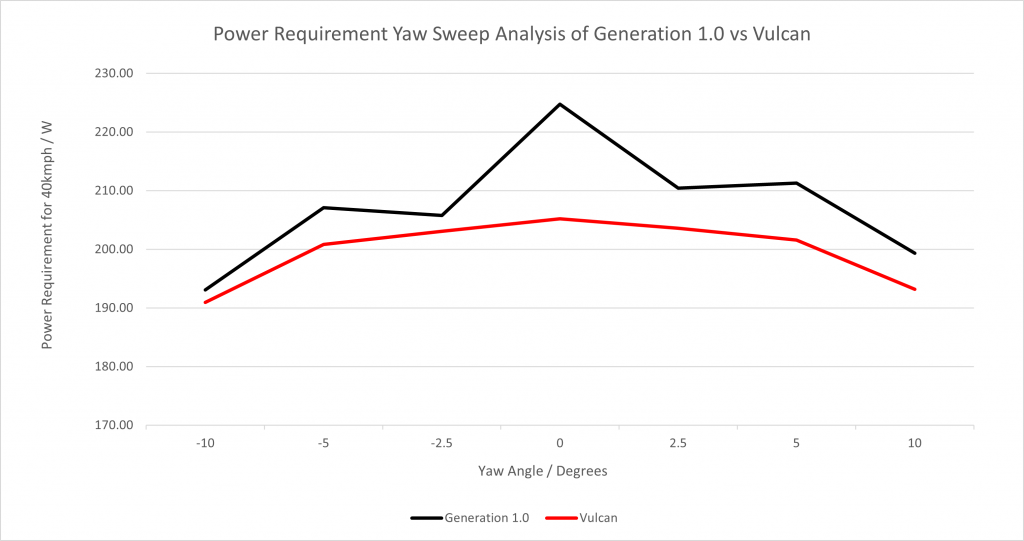
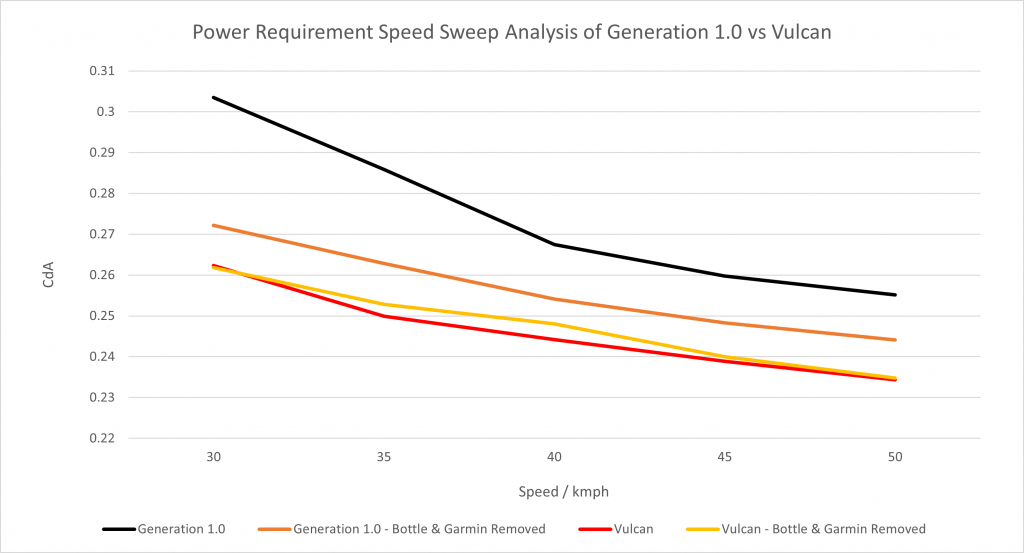
We tested the Vulcan against the Gen 1.0 across a range of yaw angles at 40kmph, before testing both bikes across a range of speeds from 30 – 50 kmph. This gave us a clear picture of how the bike behaved in varying conditions and how it would fare on different courses.
The yaw angle test results were extremely promising, with the Vulcan not only testing consistently faster across the sweep of angles, but the tests also showed us that the Vulcan is more stable between changes in yaw angle – demonstrated by the less erratic line on the graph above. The Vulcan tested 2 – 20w faster than its predecessor at the varying angles.
But the good news doesn’t stop there. We then tested the Vulcan and Gen 1.0 with and without their respective front hydration systems fitted. The Gen 1.0 utilised after-market handlebars, in this case the PRO Missile Evo handlebar system with an adapter setup for using standard round extensions. The Vulcan on the other hand, utilised our proprietary cockpit setup, with aero extensions and aero BTA bottle cage and computer mount.
Again, the Vulcan was the clear winner – putting an astonishing 14 – 34w between itself and the Gen 1.0 with their respective BTA bottles mounted, and 4 – 15w with the BTA bottles removed.
What we were most excited about is that usually when adding components to a bike, you expect the aerodynamic performance to be negatively affected. With our own cockpit, we have managed to produce a system that is drag neutral when you have it mounted to your bike. As you can see from the graph above, when the BTA bottle was removed from the Gen 1.0, the performance improved quite significantly, but this isn’t seen on the Vulcan.
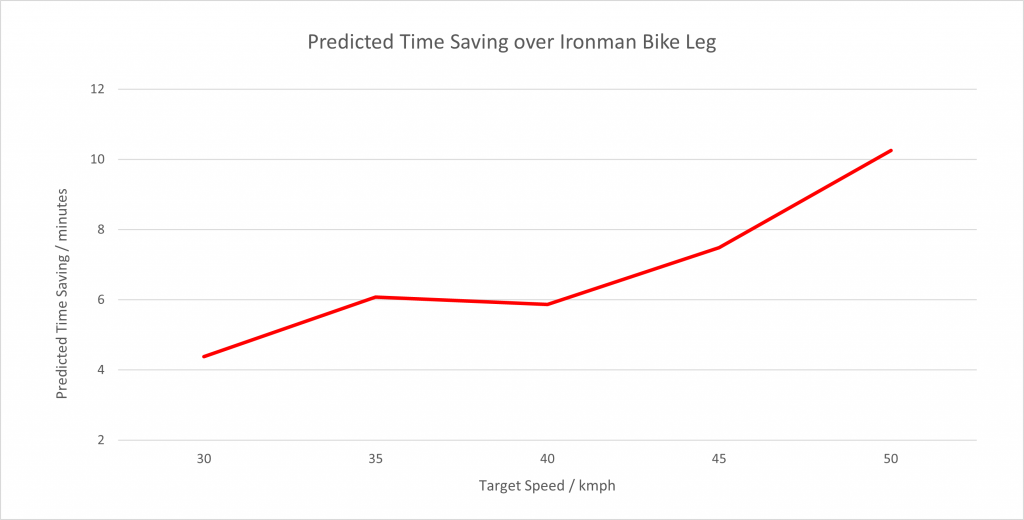
These improvements lead to massive performance gains over the 180km bike leg of an Ironman. The Vulcan setup is now between 4.5 – 7.5 minutes faster over the Ironman Bike Leg than the Gen 1.0 from an aerodynamic perspective. When you also consider the improved stiffness and compliance within the frame, the Vulcan will carry you to an Ironman finish time a considerable amount quicker than the Gen 1.0 and we bet, quicker than any other bike on the market.
Please note that these figure were achieved under test conditions and results may differ slightly out on the road. We try our best to make sure the tests are as accurate as possible by putting the rider in the same position on both bikes. You can download the raw test data below.
We use cookies on our website to give you the most relevant experience by remembering your preferences and repeat visits. By clicking “Accept All”, you consent to the use of ALL the cookies. You can check our Privacy Policy page for more information.
This website uses cookies to improve your experience while you navigate through the website. Out of these, the cookies that are categorized as necessary are stored on your browser as they are essential for the working of basic functionalities of the website. We also use third-party cookies that help us analyze and understand how you use this website. These cookies will be stored in your browser only with your consent. You also have the option to opt-out of these cookies. But opting out of some of these cookies may affect your browsing experience.
Necessary cookies are absolutely essential for the website to function properly. These cookies ensure basic functionalities and security features of the website, anonymously.
Cookie
Duration
Description
cookielawinfo-checkbox-analytics
11 months
This cookie is set by GDPR Cookie Consent plugin. The cookie is used to store the user consent for the cookies in the category "Analytics".
cookielawinfo-checkbox-functional
11 months
The cookie is set by GDPR cookie consent to record the user consent for the cookies in the category "Functional".
cookielawinfo-checkbox-necessary
11 months
This cookie is set by GDPR Cookie Consent plugin. The cookies is used to store the user consent for the cookies in the category "Necessary".
cookielawinfo-checkbox-others
11 months
This cookie is set by GDPR Cookie Consent plugin. The cookie is used to store the user consent for the cookies in the category "Other.
cookielawinfo-checkbox-performance
11 months
This cookie is set by GDPR Cookie Consent plugin. The cookie is used to store the user consent for the cookies in the category "Performance".
viewed_cookie_policy
11 months
The cookie is set by the GDPR Cookie Consent plugin and is used to store whether or not user has consented to the use of cookies. It does not store any personal data.
Functional cookies help to perform certain functionalities like sharing the content of the website on social media platforms, collect feedbacks, and other third-party features.
Performance cookies are used to understand and analyze the key performance indexes of the website which helps in delivering a better user experience for the visitors.
Analytical cookies are used to understand how visitors interact with the website. These cookies help provide information on metrics the number of visitors, bounce rate, traffic source, etc.
Advertisement cookies are used to provide visitors with relevant ads and marketing campaigns. These cookies track visitors across websites and collect information to provide customized ads.
Other uncategorized cookies are those that are being analyzed and have not been classified into a category as yet.
Engineered carbon:
materials & method
Because attacks and sprints place such great loads on road race bikes, we drew on the engineering of our Vulcan tri bike to make the Vekta massively stiffer than any rival. We used the technology that made a beam bike ride like a road bike to make a road bike ride better than any before. We achieved this in two ways: material selection and construction method.
Carbon fibre comes in many grades and, as with everything, the best fibres are more expensive. At REAP, all materials are selected by engineers, not accountants, and the Vekta is made with a blend that is over 80% ultra-high modulus Toray M40J unidirectional fibre. That’s a vastly higher percentage and grade than most manufacturers use in their top models.
Our raw material cost is around 50% higher yet the Vekta is very competitively priced; it’s a reinvestment that we can make because we sell direct to you and, unlike the vast majority, we don’t outsource production – we are our own factory. Expert deployment is crucial to get the best from these materials and that’s where our 25 years of composite engineering experience are invaluable. The carbon fibre lay-up is intuitive to us.
The performance of the carbon fibre lay-up is boosted significantly by our trade secret manufacturing method, a hugely effective innovation that’s unique to REAP. We can’t tell you what it is, but we promise you will feel the difference it makes.
As a true monocoque, the Vekta is made in a single piece, whereas mass-produced bikes are made in a number of pieces and then joined. Our way is more difficult, but the result is an optimised frame, free from parasitic weight – mass that is made necessary by compromised design and doesn’t add value.
Every element of the Vekta is designed for maximum performance. Sure, there are slightly lighter aero-road frames, but none that come close to the way the Vekta feels. We chose to invest a little frame weight to achieve a huge increase in stiffness which results in levels of steering precision and power transfer efficiency you’ve never even dreamed of. We know that you’ll feel it as soon as you stand on the pedals.